


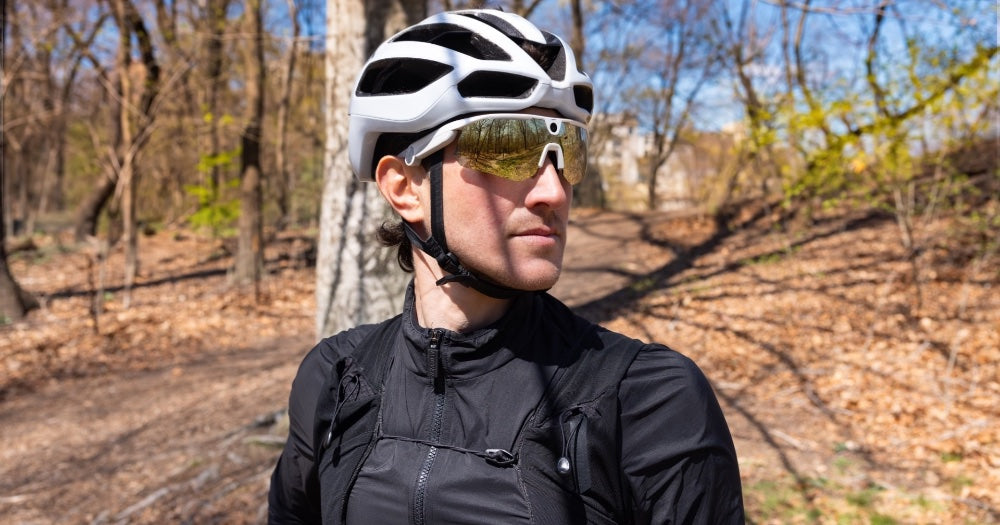
Cycling camera glasses guide
Camera glasses are becoming a practical alternative to helmet-mounted cameras because the lens sits close to the rider's line of sight. The right pair should make recording feel like part of the ride, not a separate filming project.
Cyclists usually compare three setups: a helmet camera, a handlebar camera, or camera glasses. Helmet and handlebar cameras can still win for planned filming, multiple angles, and maximum stabilization. Camera glasses solve a different problem: they capture what the rider is actually looking at, with less setup and a more natural POV.
This guide follows the improvement framework in three real use cases: scenic route riding, city commuting, and training rides. It also maps those standards to BleeqUp Ranger so you can see which specifications matter in practice.

Helmet Camera vs. Camera Glasses: Is the Switch Worth It?
A helmet camera is still the stronger tool when you want the highest image quality, advanced stabilization, long planned recording, or several camera angles. It is also easier to aim at a fixed viewpoint once it is mounted. The tradeoff is that it does not always follow your attention, and it adds another device to prepare before the ride.
Camera glasses put the lens near your natural line of sight. That makes them useful for moments that happen quickly: a turn on a scenic road, a driver interaction on a commute, a group-ride move, or a training effort you want to review later. When the glasses also include AI highlights or one-tap clip tools, the value shifts from raw recording power to a faster ride-to-clip workflow.
If you need professional multi-angle footage, keep an action camera in the kit. If you want recording to become part of normal riding, camera glasses are often the more practical switch.
What Each Scenario Actually Needs
Scenic Route Riding
Route riding needs shareable footage, not just long files. Prioritize a field of view around 120 degrees, lenses that adapt to changing light, and an app that can find useful moments after the ride. AI highlights matter because scenic routes often produce more footage than riders want to edit manually; a good workflow should help mark moments and build a short reel quickly.
City Commuting
Commuting needs simplicity and awareness. Look for one-button recording, clear capture feedback, open-ear audio for prompts and calls, and enough weather resistance for daily use. A base battery around one hour can cover many short commutes, but riders who record every trip should still check storage, charge habits, and local privacy rules.

Training Rides
Training adds repetition: sweat, head checks, climbs, intervals, rough pavement, and longer sessions. A useful pair should stay stable under a helmet, use a sport-friendly frame material such as TR90, support ride-data context where possible, and have a battery plan for two- to three-hour rides or selective recording.
BleeqUp Ranger Mapped to These Standards
BleeqUp Ranger is a camera-first example of cycling smart eyewear. The point is not that every rider needs every feature. It is that the strongest specifications map to specific ride problems: route footage, commute reliability, training fit, and post-ride editing.
| Need | Ranger reference point | Why it matters |
|---|---|---|
| Natural POV | 120-degree field of view | Shows route context without forcing a mounted-camera perspective. |
| Video quality | 3K60fps video and 16MP sensor | Balances motion detail and image clarity for rides. |
| AI editing | One-Tap Clip plus AI Master Motion / Remix Beta | Shortens the path from recorded ride to shareable highlight. |
| Short commute battery | Built-in 260mAh battery, about 1 hour video | Fits short capture sessions and many daily routes. |
| Long route battery | Power Plus 1600mAh, up to about 5 hours video | Gives longer-route riders a more realistic recording plan. |
| Open-ear audio | 4 speakers, 5-mic noise reduction, wind reduction to 40 km/h | Supports prompts and calls while preserving more environmental awareness. |
| Training fit | 3-way adjustable non-slip nose pad and TR90 frame | Helps the frame stay usable through sweat and movement. |
| Ride data | Garmin cadence and heart-rate sensor overlay support | Makes training clips easier to review in context. |
| Lenses and RX | Swappable, photochromic, ZEISS, and prescription insert options | Keeps the eyewear useful across light conditions and vision needs. |
Feature availability can vary by device, app version, and current product configuration, so confirm the latest details on the product page before ordering. For optical choices, see the Ranger ZEISS lenses guide. For post-ride editing, the BleeqUp App guide explains One-Tap Clip, AI Highlights, maps, and intercom.
5 Questions to Ask Before Buying
- What do you record most: scenic routes, traffic context, training clips, or planned content?
- How long do you need to record: short commute clips, selected moments, or multi-hour routes?
- Can you operate it safely: one-button controls and open-ear audio matter more than hidden menus.
- Will the frame stay comfortable: check helmet fit, nose support, sweat, lens coverage, and prescription needs.
- How fast is the editing workflow: AI highlights and app tools matter if you do not want to review every minute manually.
FAQ
Can camera glasses replace an action camera for cycling?
They can replace an action camera for commuting, personal POV, route memories, and quick social clips. They do not replace a full action-camera setup for overhead angles, multi-camera shoots, or all-day planned filming.
Are camera glasses legal for cycling?
Rules vary by location. Ride safely, respect privacy, follow local recording and audio laws, and avoid any control behavior that distracts you from the road.
Can one pair cover routes, commutes, and training?
Yes, if you accept tradeoffs. A single pair can cover all three when fit, battery, lens options, and app workflow match your most common use case. Long routes and structured training may need more battery planning than a short commute.
Do prescription cyclists have options?
Some camera glasses support prescription inserts or optical workflows. Ranger supports an RX insert, and ZEISS or prescription paths should be confirmed through the current product information and an authorized optician.
Bottom Line
The right camera glasses depend on how you ride. For route riding, look for a 120-degree-style POV, adaptable lenses, and AI highlights. For city commuting, prioritize one-button recording, open-ear audio, and weather resistance. For training, start with stable fit, ride-data context, and expandable battery planning. For a product-specific reference, read the BleeqUp Ranger review or compare the broader camera glasses for cycling buying guide.


